Research

An engraved crystal and a differing outline compared through a lens

2026 · Preprint · Vision paper

Testing Honesty In Language Models And Agents

Human oversight increasingly depends on what AI systems report. This vision paper examines explicit claims that conflict with a system’s judgment at the time of reporting, when faithful communication is required. It outlines an initial honesty-testing framework and research agenda for language models and complete agents.

Full citation

Honesty Testing Of LLMs And AI Agents: A Vision For Software Engineering

Ying Xiao, Xinjian Wu, Lukas Twist, Yaoqi Guo, Yepang Liu, Zhenpeng Chen, and Jie M. Zhang.

A fine evidence thread connects translucent stages beside an engraved scientific instrument

2026 · Preprint · Vision paper

Making AI-Driven Science More Reliable

Errors in AI-generated code, experiments, and evidence interpretation can undermine scientific conclusions. This vision paper proposes a Scientific Assurance Chain linking research intent to claims, using six documented failures to motivate a software-engineering research agenda.

Full citation

Software Engineering For AI-Driven Science

Lukas Twist, Xinjian Wu, Jingzhi Gong, Shuyin Ouyang, Ying Xiao, Benedetta Donato, Yaoqi Guo, Zhenpeng Chen, Leonardo Mariani, Helen Yannakoudakis, and Jie M. Zhang.

An anatomical hand engraving overlaid with a translucent measurement sheet

2026 · Communications Health

Mapping Bias In Medical AI

This scoping review brings together 92 studies on bias in large AI models for medicine and healthcare. It examines bias types, detection methods, and mitigation strategies, and identifies gaps in fairness definitions, evaluation data, and validation in real healthcare settings.

Full citation

A Scoping Review Of Bias In Large AI Models For Medicine And Healthcare

Ying Xiao, Zhenpeng Chen, Jen-tse Huang, Wenting Chen, Yepang Liu, Kezhi Li, Mohammad Reza Mousavi, Richard Dobson, and Jie M. Zhang. Communications Health.

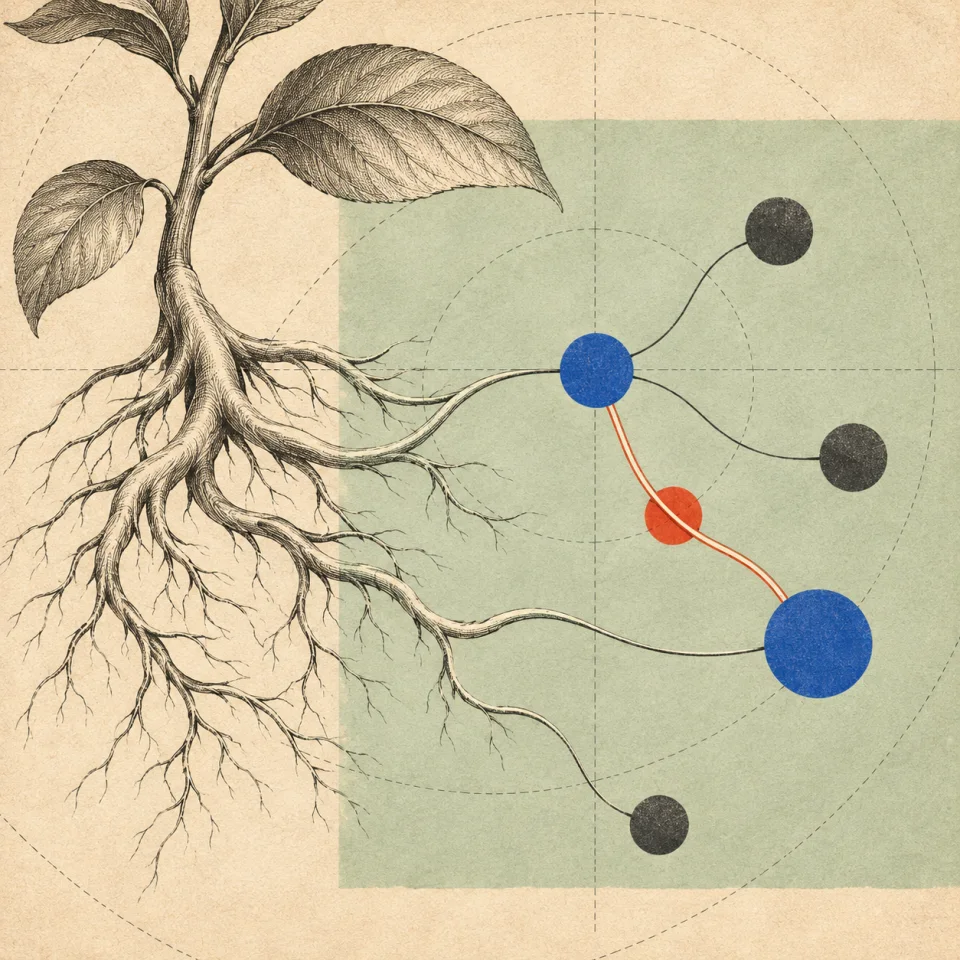
An engraved root system merges with causal nodes and one carefully rerouted connection

2026 · TOSEM

Repairing Fairness With Causal Models

Fairabel uses causal models to guide changes to training data and multi-objective optimization to balance fairness with predictive performance. Evaluations across decision-making scenarios examine how it mitigates bias involving individual and intersecting sensitive attributes while preserving model performance.

Full citation

Software Fairness Analysis And Repair Via Causal Model-Guided Data Mutation

Ying Xiao, Zhenpeng Chen, Yepang Liu, Mohammad Reza Mousavi, and Jie M. Zhang, ACM Transactions on Software Engineering and Methodology (TOSEM).

A mechanical drawing instrument traces repeated loops with a deliberate early exit

2026 · ACL Findings

Reducing Wasted Effort In Software Engineering Agents

EET learns from past issue-resolution attempts to guide early termination during patch generation and selection. Evaluations on SWE-bench Verified across three agents show lower operating costs with negligible loss in issue-resolution rate.

Full citation

EET: Experience-Driven Early Termination For Cost-Efficient Software Engineering Agents

Yaoqi Guo, Ying Xiao, Jie M. Zhang, Mark Harman, Yiling Lou, Yang Liu, Zhenpeng Chen, ACL 2026 Findings.

Translucent role masks overlay one neutral engraved face while adjacent dot patterns shift

2026 · FSE

How Role-Playing Affects Model Fairness

This study tests ten language models using 33,000 questions spanning 550 roles. Removing role-playing instructions significantly reduces biased responses across the tested models, highlighting how adopting a role can change a model’s fairness behaviour.

Full citation

Fairness Testing Of Large Language Models In Role-Playing

Xinyue Li, Zhenpeng Chen, Jie M. Zhang, Ying Xiao, Tianlin Li, Weisong Sun, Yang Liu, Yiling Lou, Xuanzhe Liu, Proceedings of the ACM on Software Engineering (FSE 2026).

Different engraved seeds beside coloured geometric forms and shared measuring guides

2026 · ICSE

Tuning Data Correlations To Mitigate Bias

Correlation Tuning adjusts relationships between sensitive attributes and labels, with multi-objective optimization addressing proxy bias. In the evaluated settings, it improves predictive outcomes for unprivileged groups and reduces several bias measures, connecting fairness with software quality.

Full citation

Fairness Is Not Just Ethical: Performance Trade-Off Via Data Correlation Tuning To Mitigate Bias In ML Software

Ying Xiao, Shangwen Wang, Sicen Liu, Dingyuan Xue, Xian Zhan, Yepang Liu, and Jie M. Zhang, 2026, IEEE/ACM 48th International Conference on Software Engineering (ICSE 2026).

Different translucent filters alter a shared trace beside an engraved medical instrument

2026 · Philosophical Transactions of the Royal Society A

The Trade-Offs Of Prompting For Fairer Medical AI

This study compares prompting strategies across five language models, examining fairness, accuracy, and inference overhead. Effects vary substantially by model, and some prompts worsen bias. Chain-of-thought prompting improves bias mitigation but adds computational overhead.

Full citation

Mitigating Medical Bias In Large Language Models By Prompt Engineering: An Empirical Study Of Effectiveness And Trade-Offs

Ying Xiao, Zhenpeng Chen, and Jie M. Zhang, Philosophical Transactions of the Royal Society A.

A coupled mechanical linkage connects two distinct groups of shapes, revealing a trade-off

2025 · FSE

Who Benefits When We Mitigate Bias?

Across tabular-data tasks, the evaluated mitigation methods often improve outcomes for unprivileged groups at a cost to privileged groups. Further experiments suggest that selectively applying interventions to unprivileged groups could improve fairness without these losses.

Full citation

Software Fairness Dilemma: Is Bias Mitigation A Zero-Sum Game?

Zhenpeng Chen, Xinyue Li, Jie M. Zhang, Weisong Sun, Ying Xiao, Tianlin Li, Yiling Lou, and Yang Liu, Proceedings of the ACM on Software Engineering (FSE 2025).

Two nearly identical medical case cards are compared, with one controlled variation highlighted

2025 · Preprint · v1

Testing Demographic Bias In Medical Answers

AMQA introduces 4,806 adversarial medical question-answer pairs and evaluates five language models. It reveals accuracy gaps associated with race, sex, and socioeconomic status, providing a dataset for testing disparities that overall accuracy can obscure.

Full citation

AMQA: An Adversarial Dataset For Benchmarking Bias Of LLMs In Medicine And Healthcare

Ying Xiao, Jie Huang, Ruijuan He, Jing Xiao, Mohammad Reza Mousavi, Yepang Liu, Kezhi Li, Zhenpeng Chen, Jie M. Zhang.

One engraved seed specimen appears through two angled mirrors, with predictions brought together

2024 · FSE

Improving Fairness With Counterfactual Predictions

MirrorFair trains models on original data and counterfactual data with modified sensitive attributes, then adaptively combines their predictions. Evaluations across multiple tasks and learning algorithms show an improved balance between fairness and predictive performance compared with the methods studied.

Full citation

MirrorFair: Fixing Fairness Bugs In Machine Learning Software Via Counterfactual Predictions

Ying Xiao, Jie M. Zhang, Yepang Liu, Mohammad Reza Mousavi, Sicen Liu, Dingyuan Xue, Proceedings of the ACM on Software Engineering (FSE 2024).

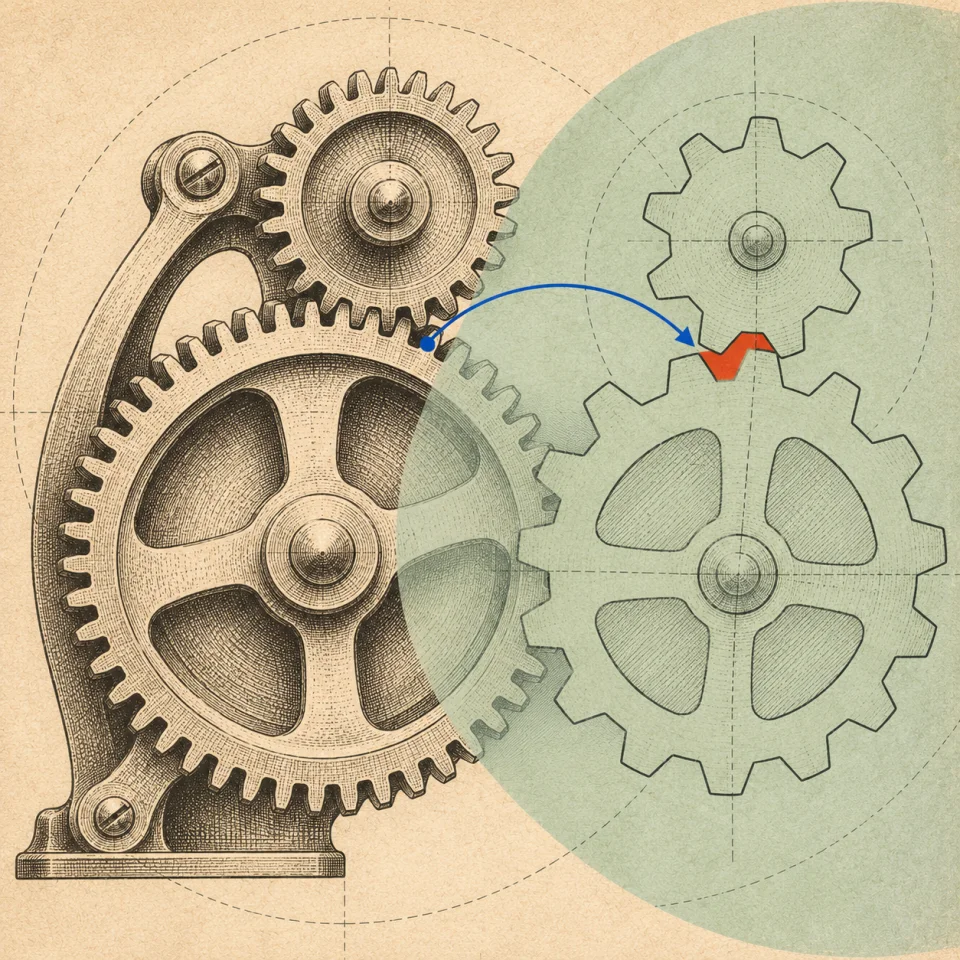
Detailed and simplified gear assemblies are compared with a misaligned part highlighted

2023 · ICSE

Understanding Bugs In Model Optimization

Model optimization can introduce defects that corrupt outputs, reduce accuracy, or cause crashes. This study examines 371 real-world optimization bugs in TensorFlow and PyTorch, characterizing symptoms, root causes, lifecycles, and challenges in detection and repair.

Full citation

A Comprehensive Study Of Real-World Bugs In Machine Learning Model Optimization

Hao Guan, Ying Xiao, Jiaying Li, Yepang Liu, Guangdong Bai, 2023 IEEE/ACM 45th International Conference on Software Engineering (ICSE 2023).

Two intertwined botanical stems are carefully separated while their individual root structures remain intact

2023 · Preprint · v1

Mitigating Bias Through Causal De-Correlation

FITNESS modifies training data to reduce causal associations between sensitive attributes and labels, using multi-objective optimization to balance fairness and performance. Across benchmark tasks, it improves fairness while avoiding performance degradation in most evaluated scenarios.

Full citation

FITNESS: A Causal De-Correlation Approach For Mitigating Bias In Machine Learning Software

Ying Xiao, Shangwen Wang, Sicen Liu, Dingyuan Xue, Xian Zhan, and Yepang Liu.